
Digital Accessibility Services for Municipalities
The updated ADA Title II rule requires your town’s websites, documents, and digital services to meet WCAG 2.1 AA. We answer the three questions every municipal team is asking: where to start, what to prioritize, and how to do it with limited staff and budget.
Schedule a 15-minute conversation
What our clients say
Dirigo Interactive has been a practical, hands-on partner in helping Portland build a real digital accessibility program. From our initial needs assessment through procurement governance, staff training, and vendor evaluation tooling, they’ve helped us move from awareness to action with tools and processes our teams can actually use.
ADA Title II
The deadline
DOJ extended these dates in April 2026. Only the dates moved. The requirement to be accessible did not. For most towns, April 2028 is two budget cycles away, which makes now the right time to scope the work and put a real number in next year’s budget request.
2027
2028
Getting started
Where most towns start
The Digital Accessibility Needs Assessment.
A three-to-four week engagement that looks at your accessibility as a whole. Not just the digital assets the public touches, but the technology you run on and the people and processes behind it.
What we look at
Your digital assets
Website, payment and permitting portals, PDFs and documents, email newsletters, social media, and public kiosks.
Your technology and tools
The platforms and vendor systems your staff rely on, from your CMS to your payment and permitting tools.
Your people and process
Your team’s knowledge, your policies, and how content gets created and published day to day.
What you get
One plain-language report: what’s exposed, what matters most, and what to do, in priority order.
A free vendor scan
Scans your website automatically. It can’t see your PDFs, your social channels, your staff’s knowledge, or your policies, and it’s built to sell you a subscription.
A Dirigo needs assessment
Looks at the whole picture: every channel, the technology you run, and the people and processes behind it. Practitioner-led, with risk-based recommendations you can act on.
The assessment also scopes everything that follows, so you decide with evidence, not guesswork.
No pressure. We’ll tell you what a sensible first step looks like for a town your size.
The full service set
What the assessment leads to
The assessment points to what you actually need. Most towns draw on some mix of these.
Audits and evaluations
Deep evaluation of specific assets, delivered as a severity-ordered fix list written for whoever does the work.
PDF and document remediation
We remediate your agendas, budgets, and notices to WCAG 2.1 AA, so your staff doesn’t have to learn a specialist’s job.
Training
Live sessions for the people who publish your content, so new barriers don’t appear as fast as you fix the old ones.
Procurement and governance
Vendor technology is the biggest source of risk. We give you the contract language and tools to catch it before you sign.
Consulting and program management
Senior-level support in flexible blocks, from vendor reviews to full program management. Purchase as needed.
Working through a regional organization?
We partner with the Greater Portland Council of Governments to deliver accessibility services to their member municipalities. Collective engagements are often the most cost-effective way for smaller towns to get this work done. If you’re part of a COG or municipal league, or you run one, see how regional partnerships work.
What working with us is like
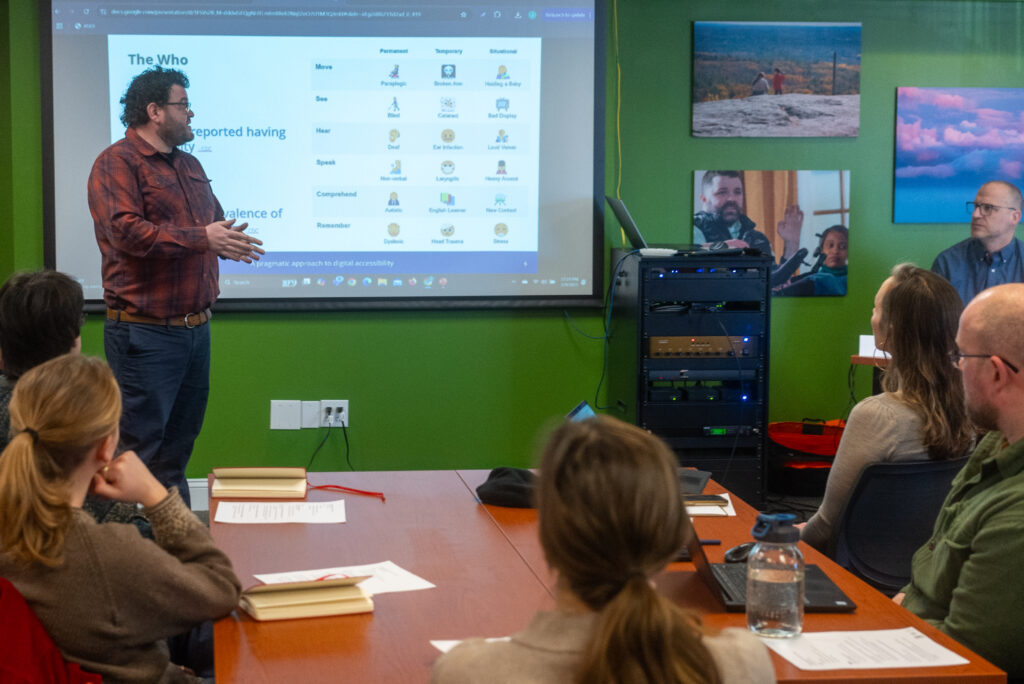
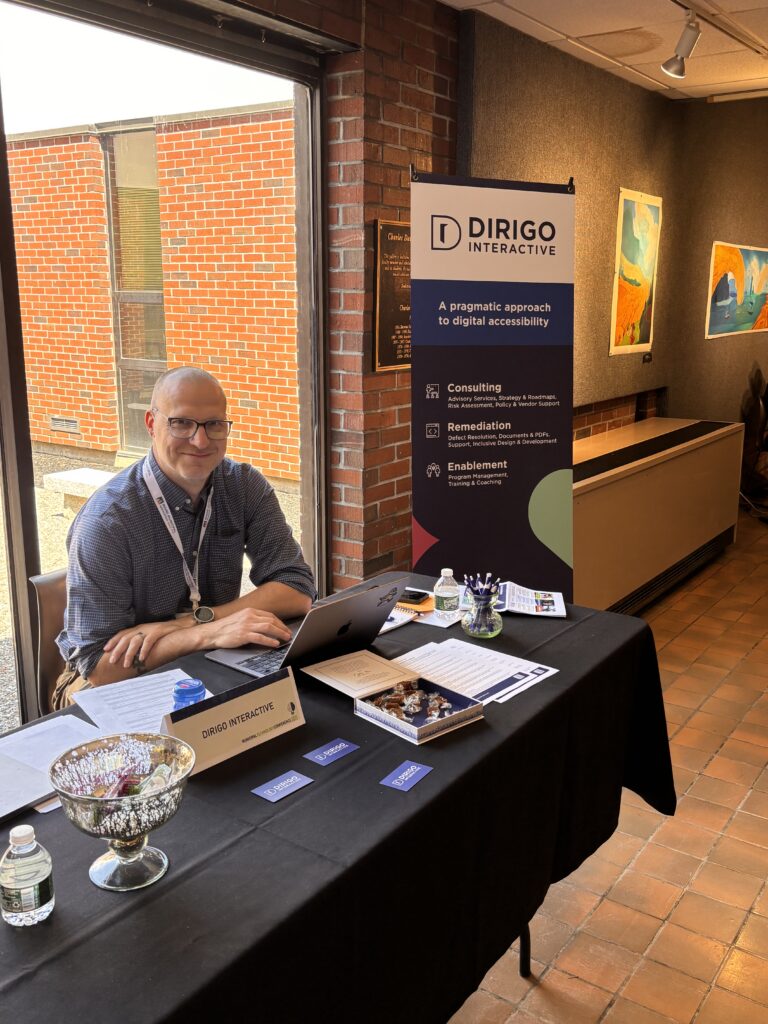
You deal directly with the two principals of the firm. We write in plain language, we prioritize ruthlessly, and we won’t recommend work you don’t need. Accessibility isn’t a project you finish. It’s a practice you maintain. Our job is to find your risk, fix what matters, and leave your team more capable than we found it.
FAQ
Questions we hear from towns
Our IT vendor handles our website. Isn’t accessibility their job?
Your vendor is responsible for the website they build. Under Title II, your town is responsible for everything: the vendor’s output, your PDFs, your payment portal, your online forms, and the documents staff post every week. The vendor does not carry your ADA obligation. We help you see the whole picture and hold every channel to the same standard.
We ran an accessibility scanner and it came back clean. Are we covered?
Automated scanners aren’t a catch-all for WGAC issues. The problems that draw complaints are often the ones a scanner cannot see: keyboard traps, unclear link text, PDFs that read as images, forms a screen reader cannot complete. Our needs assessment is practitioner-led, so the findings come from people who test the way real users do.
We’re a small town. Are we really a target?
Enforcement follows complaints, not population size. Small towns receive complaints. What matters when a complaint arrives is whether you can show a good-faith effort already underway. Starting now is what protects you, regardless of size.
We don’t have budget for this in the current cycle.
That is exactly what the needs assessment is for. April 2028 sounds far off, but it is two budget cycles away, and FY2028 money gets decided in 2026 and 2027. The assessment gives you a clear scope and a real number to put in the budget request. You cannot request funds for work you have not scoped yet. A remediation project is a starting point, and the assessment tells you what that starting point should cost.
Get started
Is this on your town’s radar?
The City of Portland and towns across New England are already moving on this. Fifteen minutes is enough to tell whether yours should be, and what a sensible first step would look like for a town your size.
No obligation. We’re accessibility nerds, happy to talk through whatever you’re wondering about.